

My First ESHRE: What I Learned About the Importance of Lifestyle and Nutrition
Written by Sophie Sulehria
I thought I knew quite a lot about fertility. After seven years of IVF, a diagnosis of Premature Ovarian Insufficiency, years of working in the fertility space and countless conversations with patients, clinicians and experts, I certainly didn’t arrive at my first ESHRE conference as a complete novice. But I still left with pages and pages of notes, about 400 new questions and a brain that, frankly, may never fully recover. And I was only there for a day! But what a day that was.
ESHRE - the annual meeting of the European Society of Human Reproduction and Embryology (ESHRE) - brings together thousands of fertility professionals from across the world. Researchers, doctors, embryologists, nurses, psychologists, policy experts and many more gather to discuss the latest research and the future of reproductive medicine. It is vast. At any one moment, multiple sessions are taking place on everything from the latest developments in embryology to artificial intelligence, PCOS, male fertility, endometriosis, genetics, new treatments and sooo much more.
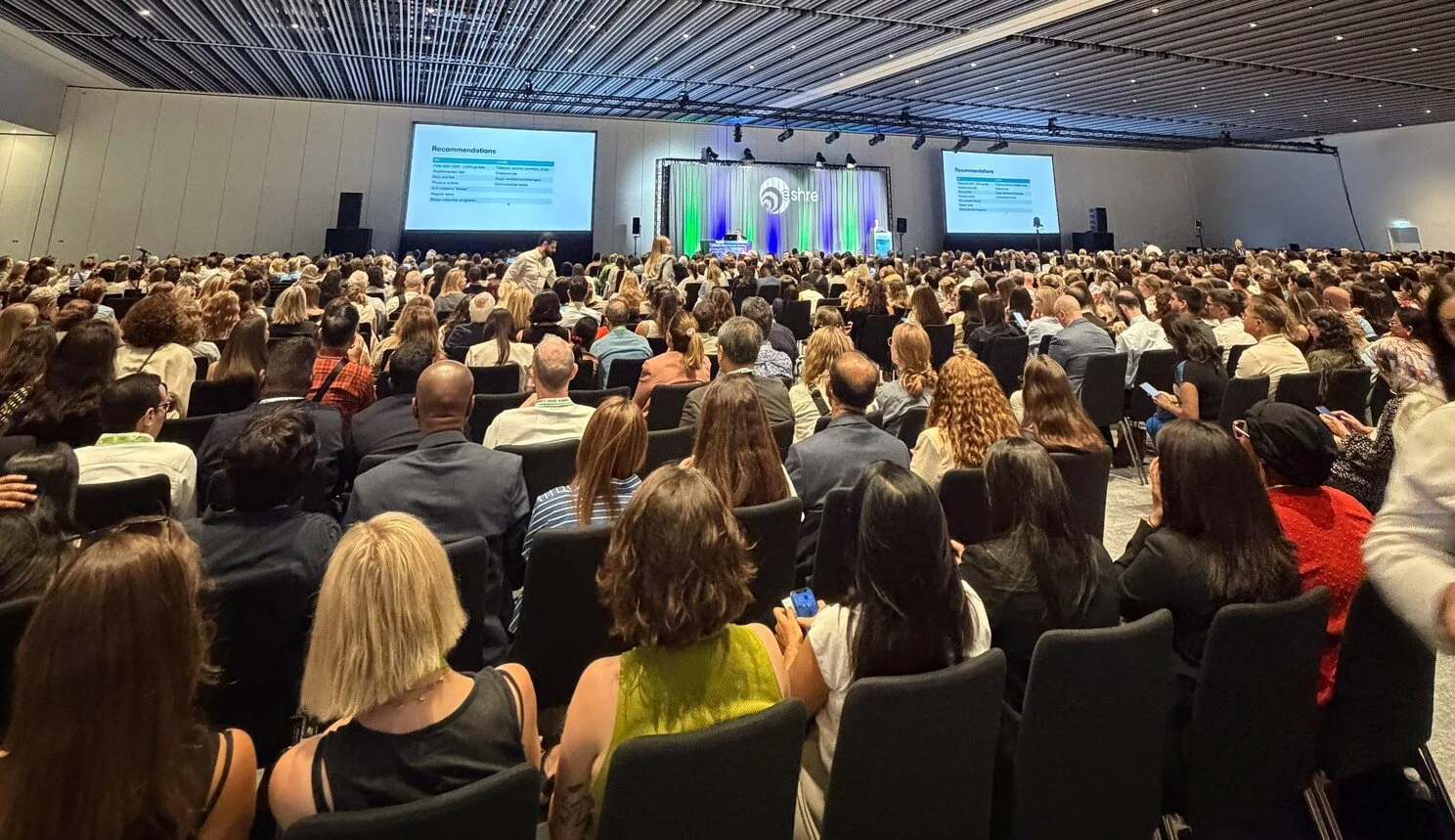
For me, attending ESHRE for the first time was fascinating. I was listening as someone who now works in this world, but also as someone who once sat on the other side of it. I was the patient waiting for answers. The woman desperate to know whether there was anything else I could do. The person Googling every supplement, every treatment and every new piece of research.
And perhaps that is why some of the conversations stayed with me so strongly.
Giving fertility patients back some agency
One of my standout sessions was on lifestyle and female fertility with Professor James P Toner (Jim Toner).
He began with an idea I loved: the importance of restoring some agency to women.
Fertility treatment can make you feel extraordinarily powerless. Your body becomes something to be measured, tested, scanned and discussed. Your life is organised around appointments and phone calls. You wait for blood results, follicle counts, fertilisation updates and pregnancy tests. So it is hardly surprising that patients ask "what can I do?"
I've been there and done it many times. And so often doctors have dismissed that there's anything you can really do in terms of diet and lifestyle, other than the obvious "don't too much drink, don't smoke at all, and don't take drugs unprescribed." Also don't get me started on the doctor who told me to "get into a time machine and start trying for a baby earlier (I was 30) but I digress...
So lifestyle advice in fertility can be a minefield, and yes there is a fine line between giving people useful, evidence-based information and making them feel responsible for an outcome they cannot control. But Professor Toner’s approach was about helping women feel more grounded and confident, rather than burdening them with another impossible list of rules.
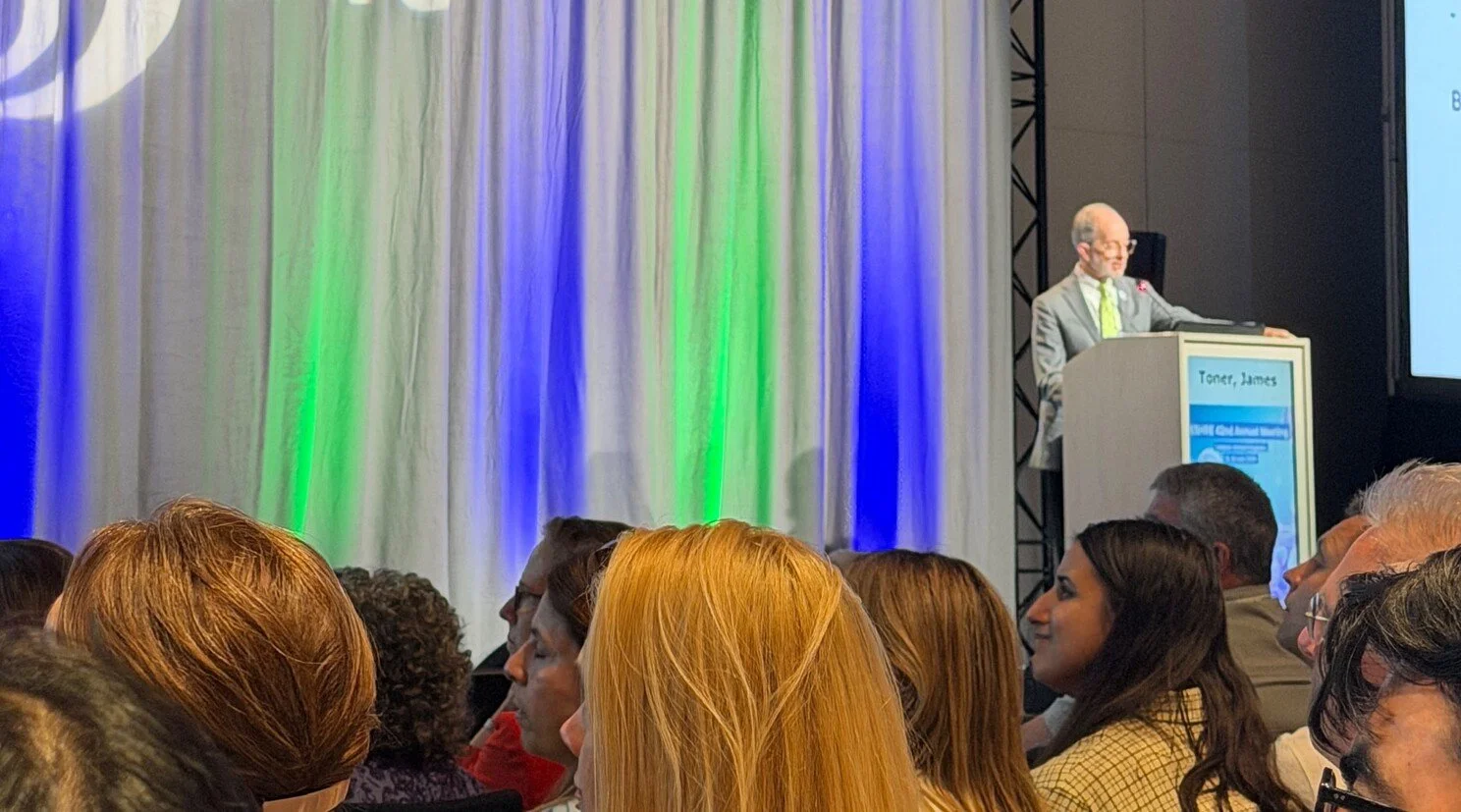
The research he presented was fascinating.
He found that:
Folic acid has been positively associated with ovarian reserve, ovarian response and live birth rates.
Greater consumption of Omega-3 has been associated with a shorter time to conception, as has following a Mediterranean-style diet.
Sleep also emerged as potentially important, with better sleep associated with higher implantation rates.
But some of the most interesting findings challenged the messages fertility patients often hear.
Alcohol and caffeine, for example, did not appear to produce a delay in conception in the evidence discussed, although of course their impact during pregnancy is a separate issue.
Weight loss also appeared to have only a minimal impact on the success of assisted reproduction.
And then there was stress.
For years, people going through fertility treatment have been told to “just relax” as if any stress may impact the eventual outcome of treatment. Of course it's hard to think of a more infuriating thing to say to someone going through infertility. And so it's wonderful to hear the proven evidence that suggested that stress itself does not negatively impact IVF outcomes.
I cannot tell you how many fertility patients need to hear that.
To note: you did not ruin your IVF cycle because you were stressed about your IVF cycle. You did not fail because you cried, worried or spent two weeks analysing every sensation in your body. And (to 33 year old self) your round did not fail because you walked up that big hill!
That does not mean psychological wellbeing is unimportant of course. Quite the opposite. The session also highlighted evidence suggesting psychological interventions may improve clinical pregnancy rates. But there is an important distinction between saying that emotional support can help someone through treatment and telling a patient that their distress caused their treatment to fail.
In essence: we need to stop making fertility patients feel responsible for things they cannot control.
Patients deserve evidence. They also deserve to be freed from the idea that if they could only eat more perfectly, sleep more deeply and somehow remain completely calm while undergoing one of the most stressful experiences of their lives, they could guarantee themselves a baby, because they can't.