

What Europe’s Latest IVF Data Tells Us About the Future of Fertility Care
Written by Sophie Sulehria
Every year, one report provides perhaps the clearest picture of how fertility treatment is changing across Europe.
Published by European Society of Human Reproduction and Embryology (ESHRE) European IVF Monitoring (EIM) Consortium, it brings together data from more than a million treatment cycles across 36 countries, offering an unparalleled snapshot of modern fertility care. Rather than focusing on a single scientific breakthrough, it reveals something arguably more important: how an entire field is evolving.
The numbers alone are remarkable.
In 2023, more than 1.15 million fertility treatment cycles were reported across Europe, resulting in the birth of 247,021 babies. Since monitoring began in 1997, more than 15.8 million treatment cycles have been recorded, leading to over 3.27 million children being born through assisted reproductive technology (ART).
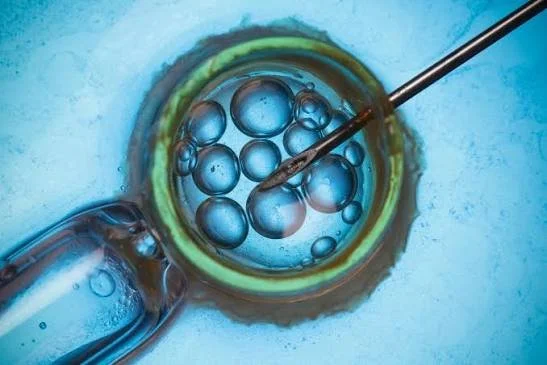
Behind every one of those babies is a person, or people, who have spent months, and often years, living in hope. Large datasets can sometimes feel impersonal, but every statistic represents a deeply personal story.
These figures show just how established fertility treatment has become. But beyond the headline numbers lies something even more significant: a picture of how fertility care itself is becoming safer, smarter and increasingly personalised.
Frozen embryos are no longer the exception
Perhaps the most significant trend emerging from this year's report is the continued rise of frozen embryo transfer (FET).
For many years, IVF was largely synonymous with a fresh embryo transfer, where embryos created during an IVF cycle were transferred back into the uterus just a few days later. Today, that picture has shifted dramatically.
In 2023, more than 401,000 frozen embryo transfer cycles were reported across Europe, compared with around 159,000 conventional IVF cycles and 388,000 ICSI cycles. Frozen embryo transfers now account for almost 43% of all IVF, ICSI and FET based treatments.
This isn't simply a technical change, but reflects a broader evolution in how fertility specialists approach treatment.
Advances in embryo freezing techniques have made cryopreservation increasingly successful, allowing clinics to optimise the timing of embryo transfer rather than feeling compelled to transfer immediately. Patients can undergo treatment, allow their body time to recover and then proceed with embryo transfer in a later cycle when conditions are more favourable.
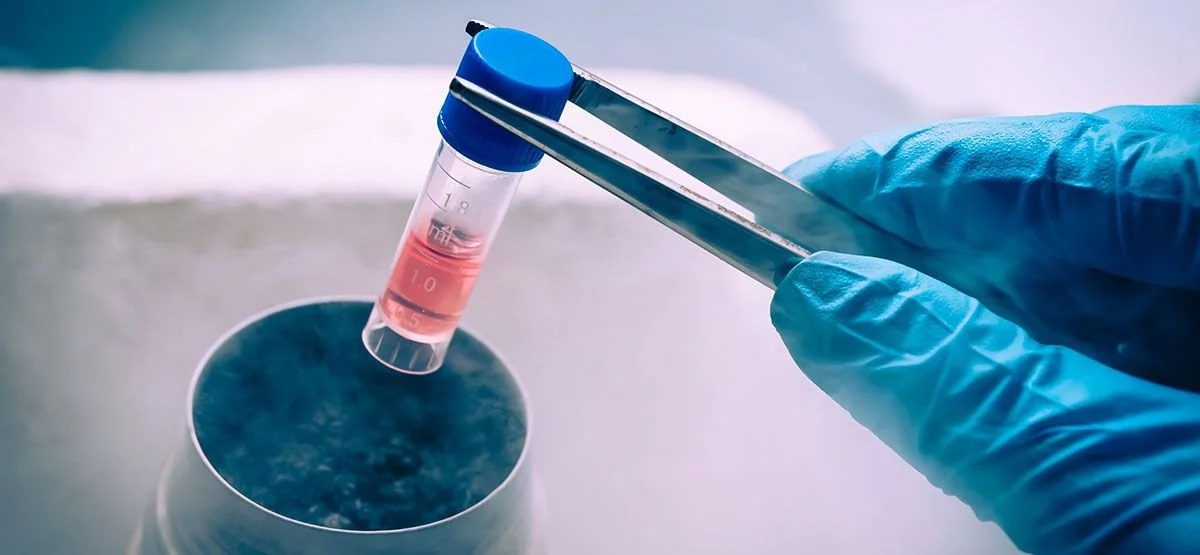
For many people beginning IVF today, frozen embryo transfer is no longer an unexpected detour. It has become an entirely routine part of treatment.
Success rates remain reassuringly stable
One concern patients often have when treatment protocols change is whether success rates are affected. The encouraging news from the EIM data is that pregnancy and delivery rates remain consistently strong.
Delivery rates per embryo transfer were:
24.4% for IVF
23.5% for ICSI
27.6% for frozen embryo transfer
Meanwhile, cumulative live birth rates continue to improve as patients benefit from embryos created during a single stimulation cycle being transferred across multiple attempts.
This reflects an increasingly personalised approach to fertility treatment. Rather than viewing one egg collection as leading to one opportunity, many patients now have several chances from a single retrieval, helping maximise the likelihood of success over time.
One healthy baby remains the goal
One of the biggest shifts in IVF over the past two decades has been the move away from transferring multiple embryos.
Historically, transferring two or even three embryos was common practice, in an effort to maximise pregnancy rates. While this often increased the chance of pregnancy, it also significantly increased the likelihood of twins or triplets, pregnancies that carry higher risks for both mothers and babies.

The latest European data show continued progress in reducing the number of embryos transferred.
Importantly, this has resulted in the lowest recorded rates of twin and triplet births since European monitoring began, without compromising overall treatment outcomes.
It represents one of fertility medicine's quieter success stories.
Success is no longer measured simply by achieving pregnancy. Increasingly, clinics are focused on achieving the safest possible outcome: one healthy baby, born at the right time, to a healthy parent.
Fertility treatment continues to become safer
The report also offers reassurance around treatment safety.
Serious complications remain uncommon. Ovarian Hyperstimulation Syndrome (OHSS), once one of the most feared complications of IVF, was reported in just 0.18% of treatment cycles. Bleeding and infection remained similarly rare.
The authors acknowledge that complications are likely to be under-reported, but the overall trend reflects decades of refinement in clinical protocols, medication regimens and patient monitoring. As fertility treatment has become more sophisticated, so too has the emphasis on reducing risk while maintaining effectiveness.
Looking beyond infertility treatment
Another noteworthy aspect of this year's report is the growing visibility of fertility preservation. More than 32,000 fertility preservation procedures were reported during 2023, although reporting remains incomplete across Europe.
Whether for medical reasons, such as before cancer treatment, or increasingly for personal and reproductive planning, fertility preservation is becoming an increasingly recognised part of reproductive healthcare.
It is another reminder that reproductive medicine is no longer solely about treating infertility. It is also about preserving future reproductive options and supporting people through a wider range of life circumstances.
Why collecting good data matters
Perhaps the most valuable message from this report isn't contained within any single statistic.
It is the importance of collecting robust, long-term data in the first place. Because these figures span nearly three decades, researchers can identify genuine trends rather than isolated findings. They can see how changes in clinical practice affect outcomes, monitor safety over time and help shape future guidance based on evidence rather than anecdote.
When I spoke to Professor Borut Kovacic, ESHRE's Chair-elect, he explained that one of the Society's biggest priorities over the coming years is improving the quality of European fertility data.

Professor Borut Kovacic speaking with Sophie Sulehria, Content Director & Host of The Fertility Show
"We have a pan-European registry in development. It's a cycle-by-cycle registry, so it's much more reliable than registries that collect only aggregated data. By collecting these medical records, we can see trends over time, and the data can be used for future scientific research."
That vision is already taking shape through EuMAR (European Monitoring of Medically Assisted Reproduction), a new pan-European registry that will collect prospective, cycle-by-cycle information from fertility clinics across Europe.
Rather than looking back retrospectively, EuMAR aims to provide even richer information about treatment pathways and outcomes as they happen, creating an even clearer picture of reproductive medicine across Europe and helping shape future care for generations of patients.
Professor Kovacic believes these datasets could become even more valuable as artificial intelligence develops. Rather than replacing clinicians, he sees AI as a tool that could help interpret decades of clinical evidence, supporting more personalised decisions around diagnostics, ovarian stimulation and embryo transfer. While important questions remain around regulation and clinical responsibility, he believes the combination of high-quality data and emerging technology has the potential to move fertility care away from a "one-size-fits-all" approach and towards treatment that is increasingly tailored to each individual patient.
A field that continues to evolve
For patients navigating fertility treatment, reports like this can sometimes feel distant, filled with percentages, registries and clinical terminology.
But behind every statistic is someone hoping to build a family.
What these latest European figures demonstrate is not simply that more than a million treatment cycles took place.
They show a specialty that continues to refine itself.
Clinics are freezing embryos more effectively. They are transferring fewer embryos while maintaining strong success rates. They are reducing complications and lowering the risk of multiple pregnancies. They are preserving fertility for more people. And they are collecting better evidence to guide future care.
Progress in fertility medicine rarely comes from one dramatic breakthrough. More often, it comes from hundreds of small improvements - better evidence, safer practice, richer data and increasingly personalised care.
As Professor Borut Kovacic suggested, the next chapter may not simply be about developing new technologies. It may be about using decades of carefully collected evidence to ensure every patient receives the treatment that's right for them, rather than relying on a one-size-fits-all approach.
That is where the future of fertility care appears to be heading, and ultimately, that is good news for everyone embarking on the path to parenthood.
This article is part of The Fertility Show's ESHRE 2026 series, where we're translating the latest fertility research into clear, evidence-based information for patients and their families.