

The Fertility Show’s survey reveals the impact of infertility on work, finances and mental health
Written by Sophie Sulehria

96% of people experiencing infertility say it has affected their working life - that’s according to findings from The Fertility Show’s 2026 Survey.
The survey draws on the experiences of The Fertility Show community and paints a stark picture of what it is really like to navigate infertility and fertility treatment today. It reveals widespread financial barriers, inadequate emotional support, limited understanding in the workplace and an overwhelming belief that people are not being properly educated about their fertility.
This year, 2,500 people came through the doors of The Fertility Show, seeking trusted information, expert advice and the chance to connect with others who understand what they are going through.
Every fertility experience is different, but our survey findings reveal strikingly consistent concerns. Our community tells us that people feel unprepared before infertility happens, unsupported when they seek help and under enormous pressure to continue working as normal while managing appointments, treatment and uncertainty behind the scenes.
More than nine in ten felt unprepared for infertility
One of the clearest findings is just how little people knew about infertility before experiencing it themselves.
Almost 65% said they knew only “a little”, while around 28% said they knew nothing at all. Fewer than one in ten felt they knew quite a lot or were fully aware of what infertility might involve.
This means more than nine in ten began their fertility experience with little or no real understanding of infertility.
This lack of knowledge is perhaps unsurprising when we consider what young people are traditionally taught. Fertility education has often focused almost entirely on preventing pregnancy, with very little discussion about reproductive health, fertility decline, common conditions or the fact that conceiving is not always straightforward.
When asked whether there was enough education about fertility in schools or early adulthood, every member of our community who answered the question said no.
It is difficult to ignore the strength of that result. It suggests that people do not simply want more information once they encounter difficulties. They want honest, age-appropriate education much earlier, enabling them to understand their bodies, recognise possible symptoms and make informed decisions about their futures.
Our community told us they wished they had been taught about age-related fertility decline, egg quality, endometriosis, polycystic ovary syndrome, male-factor infertility and the realities of IVF.
As one person explained, young people are taught that having sex can result in pregnancy, but are rarely told how difficult becoming pregnant can sometimes be.
Seven in ten face financial barriers to care
The survey also exposes the scale of the financial burden attached to infertility.
Among those asked about obstacles to accessing fertility care, 69% identified financial barriers. Only 13% said they had faced no major barriers.
More than half also reported a lack of information or guidance, while members of our community raised geographical, emotional and cultural barriers too.
For many people, access to treatment remains heavily influenced by where they live, what their local NHS services will fund and whether they can afford to pay privately. Our community described lengthy waiting lists, restrictive eligibility criteria, poor communication and the pressure to move into private care because time felt too precious to lose.
This is reflected in the strong demand for government action. An overwhelming 93% said they wanted greater NHS funding for fertility treatment.
More than three-quarters wanted action on workplace rights and leave, 82% wanted better fertility education in schools and two-thirds called for improved mental health support.
These figures highlight an important reality: fertility treatment may take place in a clinic, but its consequences reach into almost every part of a person’s life.
Infertility is having a major impact at work
The workplace findings are among the most powerful in the survey:
82% had needed time off for fertility-related appointments
72% experienced difficulty concentrating
71% reported increased stress or anxiety
Just 4% said infertility had not affected their ability to work
Fertility treatment can involve scans, blood tests, consultations, medication, egg collection, embryo transfer and procedures that are often arranged with very little notice. Alongside the practical pressure of attending appointments, people may be coping with hormonal side effects, physical pain, exhaustion, disappointing results or pregnancy loss.
Yet our community tells us that many people are expected to carry on working as if nothing is happening.
Some described using annual leave to attend appointments. Others hid the reason they needed time away because they feared being judged, treated differently or seen as less committed to their careers.
One person said fertility treatment prevented them from changing jobs because they worried about beginning a new role while undergoing treatment. Another described having to leave a job because working with children had become too emotionally difficult. Others reported brain fog, loss of confidence, severe stress and anxiety about the security of their employment.
Only around one in five said their workplace currently had a fertility policy or support system. Around half said there was no policy, while the remainder did not know whether one existed.
This means support can depend heavily on the understanding of an individual manager. Some members of our community described employers who were compassionate and flexible. Others spoke of intrusive questioning, having treatment dismissed as “elective” or being made to feel that time away was an inconvenient favour.
Overwhelming support for paid fertility leave
Our community was clear about what needs to change.
Almost everyone believed workplaces should provide specific fertility support, and more than nine in ten supported making paid leave for IVF treatment a legal requirement.
When asked which practical measures would be most helpful, 87% selected paid leave for fertility treatment and 76% chose flexible working hours.
Almost two-thirds wanted fertility training for managers and HR teams, while 55% wanted emotional or wellbeing support. Nearly half also wanted financial benefits to help with the cost of treatment.
The message for employers is clear: a policy alone is not enough.
A meaningful approach should give people the confidence to attend medical appointments without using annual leave or inventing another explanation. It should ensure managers understand the unpredictable nature of fertility treatment and know how to respond sensitively.
Most importantly, it should create a culture in which employees do not fear that being honest about infertility will damage their careers.
Nine in ten report a serious emotional impact
The emotional cost of infertility is equally difficult to overlook.
More than nine in ten said infertility had affected their emotional wellbeing either severely or moderately. More than eight in ten said they had felt isolated or stigmatised, either regularly or sometimes.
Our community described infertility as lonely, exhausting and all-consuming. People spoke about the monthly cycle of hope and grief, the strain of seeing pregnancy announcements, the impact on friendships and the pressure infertility placed on intimate relationships.
Several said that friends and relatives often wanted to help but did not know what to say. Comments such as “just relax”, “it will happen when the time is right” or suggestions to take a holiday were described as particularly painful.
Others said people wrongly viewed IVF as a guaranteed solution rather than a medical treatment that offers a chance of success.
Despite the scale of this emotional impact, the majority did not feel they had received enough emotional or psychological support alongside their medical care.
When asked what would be most valuable, 63% selected specialist counselling or therapy and 51% chose peer support groups. Our community also wanted better education for friends and family, as well as access to supportive online communities.
Infertility is not only a clinical diagnosis. It can affect a person’s mental health, identity, relationships, finances, career and vision of the future. Emotional support should therefore not be treated as an optional extra.
Society still does not understand infertility
The survey reveals a significant gap between how infertility is experienced and how it is perceived by wider society.
Roughly three-quarters did not believe infertility was widely understood or supported. Many wished people understood how common it is, how many different causes it can have and how deeply it can affect day-to-day life.
Members of our community emphasised that infertility is a medical condition, not a personal failure. They wanted greater recognition that it can affect men as well as women, that healthy people can still experience infertility and that treatment does not work for everyone.
Again and again, our community returned to the same themes: loneliness, lack of understanding, inadequate support and the feeling that they had been entirely unprepared.
A call for change
Taken together, the results of The Fertility Show’s 2026 Survey make a compelling case for action.
We need comprehensive fertility education that gives young people more than warnings about avoiding pregnancy. We need fairer and more consistent access to NHS fertility care. We need psychological support to sit alongside medical treatment, not outside it. And we need workplaces to recognise fertility treatment as a legitimate health issue requiring practical support, protection and compassion.
That is why Women in Work Summit and Let’s All Talk Fertility are holding a Forum in Manchester on 4th November, during National Fertility Awareness Week.
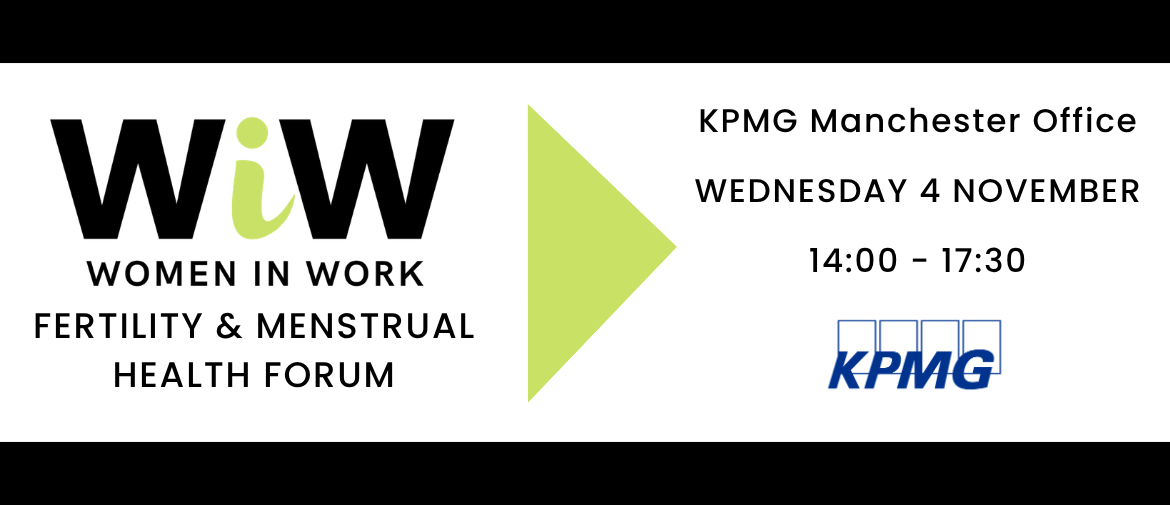
We’ll bring together leading employers, clinicians, workplace experts and people with lived experience to explore meaningful support for those navigating menstruation and menstrual-health conditions, fertility challenges and treatment, and miscarriage and pregnancy loss. We’ll examine how these experiences affect attendance, confidence, performance, progression and retention - and what organisations can do to help people remain and thrive at work.
Most of all, we need to stop expecting people to manage infertility quietly.
Behind every statistic is someone attempting to continue with meetings, relationships, family occasions and everyday responsibilities while facing a profoundly uncertain future.
The 2,500 people who attended The Fertility Show this year came from different backgrounds and were at different stages of their fertility experience. But the message we hear from our community is remarkably consistent: people facing infertility need more than treatment.
They need to be informed, supported and protected - in the classroom, in the clinic, in society and at work.
Infertility should not have to be hidden, and nobody should have to fight for information, medical care, emotional support and understanding at every stage.